
Amidst escalating geopolitical tensions in the Arctic, U.S. Vice President JD Vance’s visit to Greenland last week has intensified debates over sovereignty, security, and strategic competition.
Publicado en The Soufan Center, el 4 de abril de 2025
- As great powers – like Russia and China – vie for influence in the Arctic, the Trump administration has begun to increasingly view the acquisition of Greenland as a potential strategic victory.
- The maritime corridor between Greenland, Iceland, and the United Kingdom — known as the GIUK Gap — is a critical chokepoint that acts as a bottleneck for Russia’s Northern Fleet, enabling NATO to detect, track, and, if necessary, intercept submarines and surface vessels attempting to transit from the Arctic into the Atlantic.
- By attempting to strong-arm Greenland – and Denmark more broadly – alienating both the populace and political leadership in the process, the U.S. risks undermining Greenlandic cooperation altogether and potentially threatening a cornerstone of the broader U.S. security architecture.
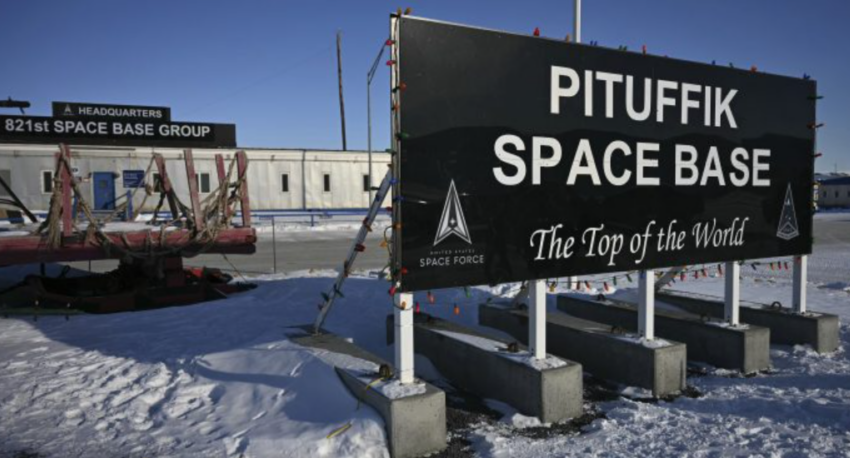
Amidst escalating geopolitical tensions in the Arctic, U.S. Vice President JD Vance’s recent visit to Greenland has intensified debates over sovereignty, security, and strategic competition. Vance, along with his wife Usha, National Security Advisor Mike Waltz, and Secretary of Energy Chris Wright, visited Greenland last Friday. The visit was limited to Pituffik Space Base, formerly known as the Thule Air Base, the only U.S. military base in Greenland, as protestors lined the street from the airport into town, derailing the original plan for Ms. Vance to attend a dogsledding race. During the visit to the base, Vance commented that Denmark – of which Greenland is a semiautonomous territory – has “underinvested” in Greenland’s security and reinforced U.S. President Donald Trump’s desire to acquire Greenland stating, “When the president says we’ve got to have Greenland, he’s saying this island is not safe.” This statement raises the question of what exactly Trump considers an adequate security scenario for Greenland itself.
U.S. interest in Greenland did not begin with the Trump administration. Throughout the 19th and 20th centuries, there were multiple, ultimately unsuccessful, attempts to purchase the territory, largely driven by its vast natural resources. After World War II, despite the failure to acquire it outright, the U.S. significantly expanded its military and security presence on the island, which became a de-facto U.S. protectorate. During the Cold War, Greenland played a pivotal role in the U.S. strategic defense architecture. Thule Air Base became a cornerstone of the Ballistic Missile Early Warning System (BMEWS), providing early detection for any potential Soviet nuclear strike. It allowed NATO to monitor Soviet submarine activity and missile tests in the Arctic, effectively turning Greenland into a northern sentinel for U.S. national security.
However, as great powers vie for influence in the Arctic, the Trump administration has begun to increasingly view the acquisition of Greenland as a potential strategic victory, including for security priorities as well as potential critical mineral extraction. China has focused a great amount of energy in carving out its own footprint in the Arctic – investing in infrastructure like mines, ports, and airfields in places like Greenland — under the banner of its «Polar Silk Road» strategy. In Beijing, the Northern Sea Route, which skirts Russia’s northern coast connecting the Pacific and Atlantic Oceans, is seen a crucial alternative to its dependency on existing maritime shipping lanes. By building economic dependencies and physical infrastructure, China is able to position itself as an Arctic stakeholder, even without territorial claims. However, a number of these attempts have been blocked by Copenhagen, according to the Swedish National China Centre. For example, a Hong Kong-based company was interested in acquiring a decommissioned Danish naval base in 2016, an offer that was turned down by Denmark allegedly due to security concerns.
Russia currently maintains a dominant presence in the Arctic, investing more than any other country in both economic and military infrastructure. It operates the world’s largest fleet of icebreakers — over 40 in total — including several nuclear-powered vessels. In contrast, the United States has just two operational icebreakers, while China has three. These ships, which can cost up to one billion dollars and take nearly a decade to build, are essential for navigating the Arctic’s treacherous, ice-covered waters and maintaining year-round access to key routes like the Northern Sea Route. Russia has also reopened and modernized dozens of Soviet-era military bases across the Russian Arctic, many of which had been dormant since the Cold War. These include installations on the Franz Josef Land archipelago and the New Siberian Islands, equipped with radar systems, air defense units, and runways capable of supporting long-range bombers.
Greenland itself is also strategically significant to Russia. Most of its northern naval forces — including its strategic nuclear submarines — are based in the Kola Peninsula near Murmansk, Russia. To reach the broader Atlantic Ocean, Russian fleets must pass through the Norwegian Sea and the maritime corridor between Greenland, Iceland, and the United Kingdom (the GIUK Gap). The gap is a crucial chokepoint that serves as a bottleneck for Russia’s Northern Fleet. Monitoring the GIUK Gap is crucial for NATO as it allows allied forces to detect, track, and, if necessary, intercept Russian submarines and surface ships attempting to access the Atlantic.
NATO has historically deployed undersea sensors, maritime patrol aircraft, and surface vessels across the GIUK Gap to track submarine movement. Greenland and Iceland – both NATO members – are key to maintaining this network. In fact, the U.S. Pituffik Space Base has been vital for early warning and anti-submarine warfare operations, making Greenland’s security apparatus vital to NATO interests. Although Greenland falls under the U.S. security umbrella through Denmark’s NATO membership, Copenhagen has admitted its defense capabilities are severely outdated. The vast territory is currently monitored by just a few aging patrol ships, a single surveillance aircraft, and traditional dogsled teams, according to reporting from the Rolling Stone.
In response to growing pressure — including from Trump-era rhetoric — Denmark has pledged over two billion dollars in defense upgrades. Still, for any U.S. administration serious about deterring Russian and Chinese activity in the Arctic, that investment may fall short given that Denmark lacks the economic and security capabilities to secure the high north. Without a fleet of anti-submarine aircraft, advanced radar technology, and a modern missile defense infrastructure, Denmark will need to rely on the U.S. assistance to secure the high north. If the island pursues independence, Denmark has signaled it may withdraw both financial aid and military support, potentially creating a dangerous security vacuum. Such a shift would significantly affect NATO’s ability to monitor the GIUK corridor and the Arctic Ocean. In that scenario, the United States is the only power with both the interest and capacity to step in.
However, the Trump administration’s so-far coercive approach to this issue may only serve to push Greenlanders away. Greenland held a snap election in mid-March in which the Demokraatit, the opposition pro-business party that advocates for a gradual path towards independence, won the election with around 30 percent of the vote. Under this new government, four of the five parties in parliament have banded together to form a coalition, comprising 23 of the 31 seats. Prime Minister Jens-Frederik Nielsen urged the parties to form a coalition to show unity against Trump’s desires to annex Greenland. The coalition agreement was signed hours before the Vance visit, signaling its defiance against U.S. expansionary interest in the territory. Denmark, and by extension Greenland, have long served as important NATO members and allies to U.S. strategic interests. By attempting to strong-arm either government and alienate both the populace and political leadership, the U.S. risks undermining Greenlandic cooperation altogether – threatening a cornerstone of the broader U.S. security architecture.