Dozens of democracy activists are thrown into jail for up to a decade
Publicado en The Economist, el 19 de noviembre de 2024
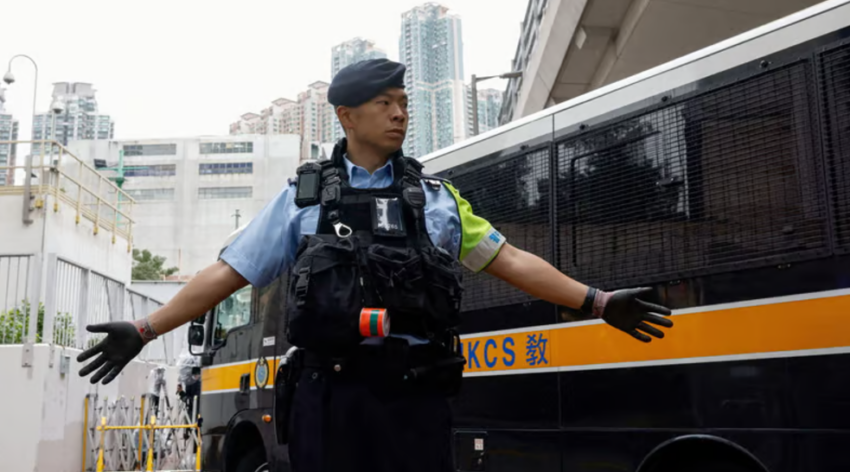
WHETHER A CRIME was even committed is debatable. Whether the punishment handed down is reasonable is another question. On November 14th judges in Hong Kong’s biggest-ever national-security trial sentenced 45 activists to between four and ten years in prison. Those jailed are among 47 pro-democracy figures, known as the “Hong Kong 47”, who were rounded up in 2021 for having organised an unofficial primary to choose candidates for the local legislature. Fourteen of the defendants were found guilty in May of conspiracy to commit subversion. Thirty-one had already pleaded guilty. Two were acquitted. The entire case has been widely criticised as politically motivated.
The plan for the primary, held ahead of an election scheduled for September 2020, was probably legal at the time the activists were drawing it up. It was also clever. Rather than split the pro-democracy vote in a system already rigged against them, they hoped to put forward a single slate of candidates. If their camp went on to win power, they planned to vote down the government’s budget and so force the chief executive at the time, Carrie Lam, to resign.
The activists had been emboldened by the huge pro-democracy protests that rocked the city in 2019. By the time the primary took place, though, the environment in Hong Kong had changed dramatically. In the interim, covid-19 had put an end to public demonstrations. And just days before the primary was held—attracting 600,000 of Hong Kong’s 4.5m voters—the central government in Beijing imposed a draconian national-security law on the city. It was under this measure that the Hong Kong 47 were arrested.
The pandemic would eventually lead to the postponement of the general election. But that did not diminish the crimes of the activists, said the government. The group threatened to “seriously damage society as a whole”, claimed John Lee, the security chief at the time. He has since taken over from Ms Lam as chief executive. In keeping with the national-security law, the defendants were tried not by a jury, but by specially appointed judges—chosen by Mr Lee.
The justices called Benny Tai, an affable law professor, “the mastermind” of the primary plan. He received the longest sentence: ten years, down from 15 for having pleaded guilty. Joshua Wong, the young face of pro-democracy protests in 2014, had done the same and was sentenced to four years and eight months. Gwyneth Ho, however, did not plead guilty. The journalist-turned-politician rose to fame when she live-streamed gangs attacking protesters in 2019 while the police looked on. She was sentenced to seven years. (Most of the activists have already spent four years behind bars while awaiting trial.)
The punishments drew swift criticism from abroad. America said the activists were “jailed for peacefully participating in normal political activity”, while the European Union called the sentencing “another unprecedented blow against fundamental freedoms, democratic participation and pluralism” in Hong Kong. Still, there are those who think the activists got off lightly. Chris Tang, Hong Kong’s security chief, suggested the government was considering whether to appeal against some of the punishments in the hope of making them stiffer. The “principal offender” in a national-security trial is eligible for a life term.
Throughout the trial hundreds of people queued through the night to secure a seat in court, suggesting a level of latent support for the pro-democracy movement. But the national-security law enacted in 2020 and a new one passed this year have instilled a certain amount of fear in Hong Kong’s liberals. Whereas once they might have chanted protest songs or waved banners outside a trial of this sort, no such dissent was on display this time. Many democrats are pessimistic that the spirit of 2019 can be recaptured.
Their mood is unlikely to improve in the near term. On November 20th the trial of Jimmy Lai is due to resume. Mr Lai, who has been charged with sedition and colluding with foreign forces, is Hong Kong’s most famous prisoner. The former media mogul and generous supporter of anti-Communist causes, who is 76, has been held in solitary confinement for more than three years. His friends say he is resigned to dying in prison—and that his real crime, like that of the Hong Kong 47, is supporting democracy.