
Artículo publicado en The Economist, el 2 de enero de 2023
The moon was high over the avenue that stretches away from St Peter’s, yet a stream of visitors was still issuing from the great basilica. Inside, the body of Pope Benedict XVI was laid out for people to pay their respects before his funeral on January 5th. Vatican officials were reportedly taken aback by the size of the crowds. On the first day, January 2nd, visitors had to queue for three hours. By the next evening, they were still waiting for 40 minutes.
Many were tourists drawn to a unique occasion. Benedict, who resigned in 2013, was the first pope in almost 600 years to quit before his death. Others who came were religious admirers. “Theologically, he represented a reawakening of the conscience of the modern, Western world,” said Stefano Crescentini, who had travelled to Rome from Perugia in central Italy. “He stood for fundamental, non-negotiable values,” added his wife, Susanna.
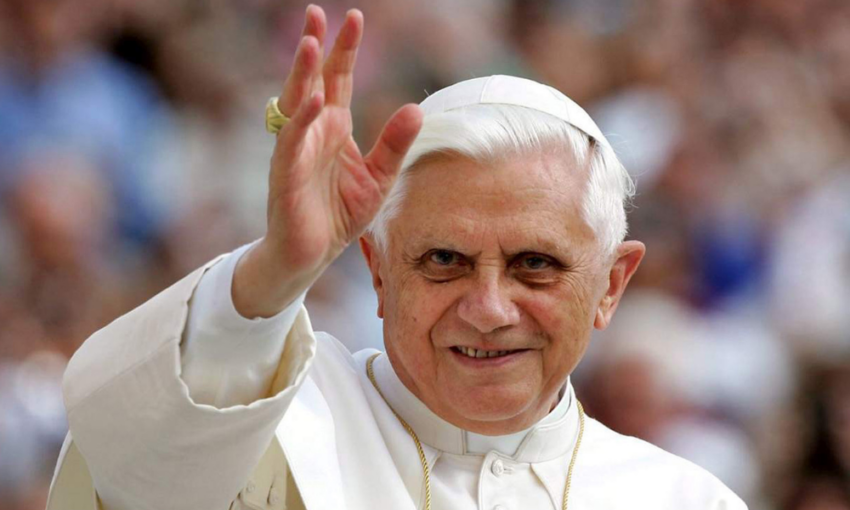
THE DEATH OF A Pope has far-reaching consequences, even if the Pope in question has not led the Roman Catholic Church for ten years. So it was with Benedict XVI, who died on December 31st. The staunchly conservative pope resigned in 2013 but remained a key figure in the struggle for the church’s future – to the occasional dismay of Pope Francis, his more liberal successor.
Francis had to lead the world’s 1.3 billion Catholics in the uncomfortable knowledge that a prelate of immense authority and radically different ideas lived just a few hundred yards away in the Vatican Gardens. Benedict continued to wear the all-white robe of a pope and called himself “pope emeritus”. After retiring, he made few public appearances but continued to make his beliefs known.
The number of sermons, letters, messages to conferences, interviews with writers, and other texts written by Benedict after the papacy amounts to about 30. In some he tacitly contradicted his successor. More frankly, he co-authored a book in defense of priestly celibacy in 2020, just as Francis appeared to be working toward a relaxation of the rule prohibiting Latin rite priests from entering into marriage. Only after controversy did Benedikt have his name removed from the cover. During his lifetime, he was a symbol of traditional values that served as inspiration for critics of Francis’ papacy. Some even questioned whether Francis’ election could be valid if a predecessor was still alive and in possession of his faculties.
Not all traditionalists admired Benedict. Nonetheless, some who agreed with his conservative theology, dislike of moral relativism, and espousal of dogmatic certainty were appalled by his resignation. It represented a break with a tradition of almost 600 years; The last pope to resign was Gregory XII in 1415, when the hot new technology was the English longbow.
And Benedict’s abdication led to the election of the most liberal pope in more than half a century. His followers saw it as an act of courage, a realistic acceptance of the fact that popes may live well past the age at which they can do much more than smile benevolently. But some critics saw his act as a cowardly refusal to carry the heavy cross of papacy to the end as his predecessor, St. John Paul II, had done.
Benedikt explained that he was neither physically nor mentally up to the job. Had he died shortly after his resignation, or had he become manifestly incapacitated, few would have questioned that justification. But as he lived on and could muster the energy to help write books, this was increasingly questioned. So it wasn’t just Catholic followers of Francis who greeted his death with some relief. His death also removed a bone of contention between Francis’ opponents.
It could also fuel the next big fight between the rival wings of the world’s largest Christian denomination: the election of the next pope. Although Benedict lifted the taboo of papal resignation, it would have been impossible for his successor to follow his example during Benedict’s lifetime: if it was considered unfortunate to have two popes alive, three would certainly be unthinkable. Francis, whose own health has deteriorated, can now step down after a decent break. He is already older than Benedikt when he resigned. Shortly after his election, he signed a declaration of resignation in case he was unavailable.
Meanwhile, Francis has named nearly two-thirds of the cardinals who would choose his successor if he were to step down now. This proportion will increase over time as the cardinals appointed by Benedict and John Paul reach 80, the age at which they lose their right to vote. There is therefore an understandable assumption that the next pope will be someone of the liberal stamp of Francis.
But papal conclaves are notoriously unpredictable. The last, crammed with prelates chosen by two conservative popes, selected an Argentine cardinal reconciled to contemporary mores and inclined to the kind of cautious ambiguity that his predecessors abhorred.
The next conclave will also be teeming with cardinals who, like Francis, do not come from the Vatican but from the pastoral periphery. Most are strangers to each other, making them more susceptible to the influence of a well-organized lobby, such as church conservatives. Benedict is dead. But it is too early to write off the brand of Catholicism he embodied.