
Alleged former members of the white supremacist, neo-Nazi terrorist organization the Base have recently claimed that its leader and founder, Rinaldo Nazzaro, is an alleged Russian intelligence asset.
Publicado en The Soufan Center, el 8 de mayo de 2025
- The Base has recently called for targeted assassinations and attacks on Ukraine’s critical infrastructure, with cash incentives for volunteer operatives; it is the first time the group has openly aligned itself with Russia’s broader geopolitical goals.
- Although Nazzaro has previously denied having any contact with Russian security services, former members have suspected him of having Russian financial backing, and the leader has recently relied heavily upon Russian digital infrastructure for recruitment, propaganda, and incitement.
- Russia has long been known to use neo-Nazi groups in kinetic and hybrid warfare, including in Ukraine and Syria, where neo-Nazi groups have fought alongside Russian forces.
Alleged former members of the neo-Nazi terrorist organization the Base have recently claimed that its leader and founder, Rinaldo Nazzaro, is an alleged Russian intelligence asset. The allegation has spread from a website claiming to speak on behalf of former members of the organization, circulating on far-right Telegram channels. The former members allege that Nazzaro had been seen “texting on a phone in Russian, in a fluent/at least good level” which “led to the belief that [he] might be a Russian federal asset”. Nazzaro, a former American contractor, has been reportedly directing the Base from Russia, where he holds citizenship, since the group’s founding in 2018. Evidence has linked Nazzaro to the Russian government since at least 2019 and he has long been suspected of being a Russian intelligence asset, although he has previously denied having any contact with Russian security services.
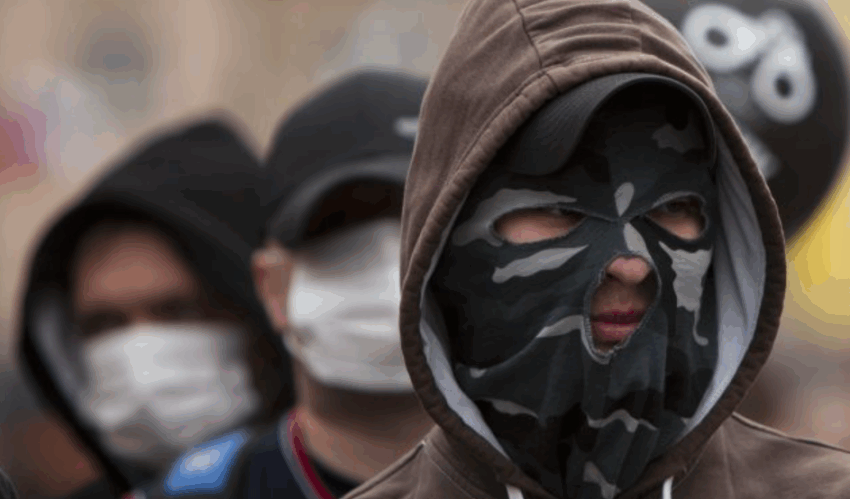
The Base is a white supremacist, neo-Nazi accelerationist organization that seeks to train its members for fighting a race war. The group is part of the broader neo-fascist “skullmask” transnational network which includes the Atomwaffen Division and Feuerkrieg. The network’s ideology is a political-religious hybrid that advocates for the formation of white ethnostates through the violent overthrow of established governments using terrorism and chaos. The Base has been designated a terrorist organization by the European Union (2024), Canada (2021), the United Kingdom (2021), Australia (2021), and New Zealand (2022), and is the first far-right group listed by the EU. In 2020, several members of the Base were arrested in the U.S. for plotting to overthrow the government and to murder a couple.
Despite Nazzaro’s denial of any connection to Russian security services, the Base has seemingly been aligned with Russia’s strategic goals, if not outright linked. In late March, the Base began calling for targeted assassinations and attacks on the critical infrastructure of Ukraine to destabilize the country. The group, through posts on Telegram, is offering cash for volunteer operatives and recruits to carry out attacks on “electric power stations, military and police vehicles, military and police personnel, government buildings, [Ukrainian] politicians,” particularly in the Ukrainian capital Kyiv and other cities. Former members have alleged the plan is a Russian intelligence operation that is gaining traction, furthering the “interests of Russia.” Moreover, the plan seems to support the Base’s wider aim to carve out a white nationalist enclave in the Zakarpattia region of Ukraine, according to The Guardian. The group has expressed interest in establishing a presence in the region, citing its mountainous terrain as advantageous for paramilitary activities.
Although the connections between the group – particularly Nazzaro – and Russia have long been suspected, the recent call for assassinations and attacks on Ukrainian critical infrastructure is reportedly the first time the Base has openly allied itself with Russia’s broader geopolitical goals. Even before this shift, the group had become increasingly enmeshed with Russian interests. The Base notably shifted much of its online content to Russian-owned sites and services in recent months, including for propaganda, recruitment, and incitement. The call for assassinations and attacks first appeared on the Base’s VKontakte (VK) account – often called the Russian version of Facebook – where the group has also directed recruits to consume its content. This shift has been reflected more broadly by far-right extremists, who have migrated toward Russian platforms with less scrutiny than Western counterparts.
Further, the group has also promoted a new recruitment email with a Mail.Ru address, the email provider owned by a well-known ally of Russian President Vladimir Putin, Yuri Kovalchuk. Kovalchuk has bolstered Putin’s invasion of Ukraine through his ownership of VK Co., which runs the social media site VK. Russian security officials have used the platform to identify and track violators of laws that ban discrediting or spreading “misinformation” about the Russian military, and VK reportedly shares data about users with authorities.
Alleged former members of the Base have also raised suspicions of the group’s financial backing, implying that Russia may be funding its operations and communications. According to The Guardian, evidence shows that whoever is running the Telegram account for the Base’s Ukraine cell has financed a bot army to increase its follower numbers into the tens of thousands. This, in addition to the cash incentives for sabotage and assassination operations, has raised significant questions about how the group is funded, particularly since the group seemed to almost disappear in 2022.
Despite overtures of “de-nazifying” Ukraine, Russia has relied on neo-Nazi groups in several conflict zones, including in its hybrid warfare against Ukraine since 2014. Members of Rusich, a Wagner-linked Russian paramilitary group that openly embraces Nazi symbolism and radical racist ideologies, the Russian Imperial Movement, and other far right groups have actively fought alongside Russian forces in Ukraine as well as in Syria, with some members linked to atrocities in both theatres. Russia’s utilization of these groups has extended throughout Europe and beyond kinetic and sabotage operations; members of the Base were arrested in Belgium, the Netherlands, and Italy last year where authorities stated the cell had ties to a network of Russian far-right terrorists recruiting on Telegram.
It can be difficult to assess the presence and reach of far-right terrorist groups, due to the leaderless structures, nebulous membership in online communities, and their often-exaggerated operational capacities. However, it is clear that the Base, as well as other neo-Nazi groups, are currently experiencing a resurgence, particularly as the U.S. notably shifts its focus away from combatting far-right extremists and terrorists. As Russia provides a safe haven for such groups, both on and offline, an outlet for violent, accelerationist actions, and potential financial incentives, such groups will likely continue to migrate eastward and provide Russia a broader toolkit for accomplishing its own purposes in the West.