The Trump administration is placing economic and diplomatic pressure on the Iraqi government to reduce its economic ties to Iran and weaken Iranian influence throughout the country.
Publicado en The Soufan Center, el 26 de febrero de 2025
- Trump officials are insisting Baghdad prevent the flow of U.S. dollars to Iran and crack down on alleged Iraqi cooperation with Iran’s illicit exportation of oil products.
- After prodding from the Trump administration, Iraq’s Arab and Kurdish leaders have finally restarted long-shuttered oil exports from Kurdish-controlled northern Iraq.
- U.S. officials are using the threat of sanctions to compel Baghdad to rein in pro-Iranian armed groups and deny them supplies of Iranian-made sophisticated arms.
On February 4, the second Trump administration made clear its intent to pressure the Iraqi government to reduce its economic ties to Iran and take steps to reduce Iran’s political and strategic influence in the country. The issuance that day of “National Security Presidential Memorandum/NSM-2,” a broad statement reimposing “maximum pressure” on Iran, stated the Trump presidency would not provide Baghdad any latitude to help Iran financially. The document directed U.S. officials to prevent Iraqi dollar transactions with Iran and deny Iran payments for the electricity and natural gas it supplies to Iraq. Washington also perceives that a reduction in Iranian oil sales, particularly to China, can be at least partly compensated by the reopening of an oil pipeline from Kurdish-controlled northern Iraq to Türkiye.
Trump aides are reportedly insisting their Iraqi counterparts take concrete and verifiable steps to bring all Iran-aligned militia groups operating in Iraq into the formal national command structure, if not disband or disarm them outright. Yet, Trump appears reticent to militarily attack the Iran-aligned Iraqi groups unless they were to resume striking any of the 2,500 U.S. forces deployed there to defeat Islamic State (IS). Taking into account the longstanding U.S. partnership with Iraq, no indications have emerged that Trump seeks to impose, or threaten to impose, any U.S. sanctions on Iraq’s energy industry or on global sales of Iraqi oil and other energy products.
The text of the presidential memorandum (NSM-2) names Iraq as one target of the broader Trump effort to deprive Iran of revenues and allies by reimposing a policy of “maximum pressure.” In one passage, the President directs the Secretary of State to: “modify or rescind sanctions waivers, particularly those that provide Iran any degree of economic or financial relief…” The clause implies U.S. officials will no longer issue sanctions waivers, such as those issued by President Biden, permitting the release of payments by Iraq to Iran for electricity and natural gas that Iran supplies the country. Those funds are held in escrow by Iraqi banks and can only be released to Iran if U.S. sanctions on financial transactions with Iran are waived.
NSM-2 also stipulates the Trump administration will, as did its predecessor, continue to hold accountable any Iraqi banks that fail to prevent the flow of dollars to Iranian financial institutions. The Memorandum directs the Secretary of State to: “take immediate steps, in coordination with the Secretary of the Treasury and other relevant agencies, to ensure that the Iraqi financial system is not utilized by Iran for sanctions evasion or circumvention and that Gulf countries are not used as sanctions evasion transshipment points.”
Baghdad has been responsive to the U.S. sanctions threats, which reportedly were reinforced by Trump officials during a meeting two weeks ago in Dubai between Iraqi Central Bank officials and their counterparts from the U.S. Treasury Department and the Federal Reserve. The Federal Reserve holds nearly $100 billion in Iraqi reserve funds – mostly proceeds from Iraqi oil sales – under agreements reached following the U.S.-led overthrow of Saddam Hussein in 2003. Iraq’s Central Bank announced last week it had banned five more Iraqi banks from engaging in U.S. dollar transactions in an effort to combat money laundering, dollar smuggling, and other violations that would benefit Iran financially. The five banks subject to the ruling are Al-Mashreq Al-Arabi Islamic Bank, United Bank for Investment, Al Sanam Islamic Bank, Misk Islamic Bank, and Amin Iraq for Islamic Investment and Finance. In 2024, the Central Bank, at the behest of U.S. officials, had already banned eight banks from conducting U.S. dollar transactions with Iran.
Iraqi officials have also moved to preempt expected pressure by Trump officials to ensure that no entities under Iraqi jurisdiction are helping Iran illicitly export oil products. Reportedly concerned that the Trump administration will target additional sanctions on Iraqi institutions, in early February, Iraq’s Oil Ministry denied reports that any Iraqi energy traders or entities were buying, receiving, or re-exporting Iranian oil or oil products. The ministry said in a statement, «All quantities of Iraqi crude oil are exported according to international mechanisms and standards that ensure the highest levels of transparency, as oil is sold to well-known international companies that own approved refineries.” The statements were intended to deny reports by Reuters news agency in December directly, after the U.S. election but before Trump took office again, that a sophisticated fuel oil smuggling network on behalf of Iran had flourished in Iraq since at least 2022. According to accounts of the illicit sales, heavily subsidized Iraqi fuel oil is being blended with a similar product from Iran but sold as a purely Iraqi product – thus helping Iran evade U.S. sanctions on Iranian energy exports. Some of the blended product is sold, using false documentation concealing their origin, by the Iran-aligned Iraqi militias that control the smuggling scheme. The alleged smuggling is assessed to be generating at least $1 billion a year for Iran and its Iraqi militia partners.
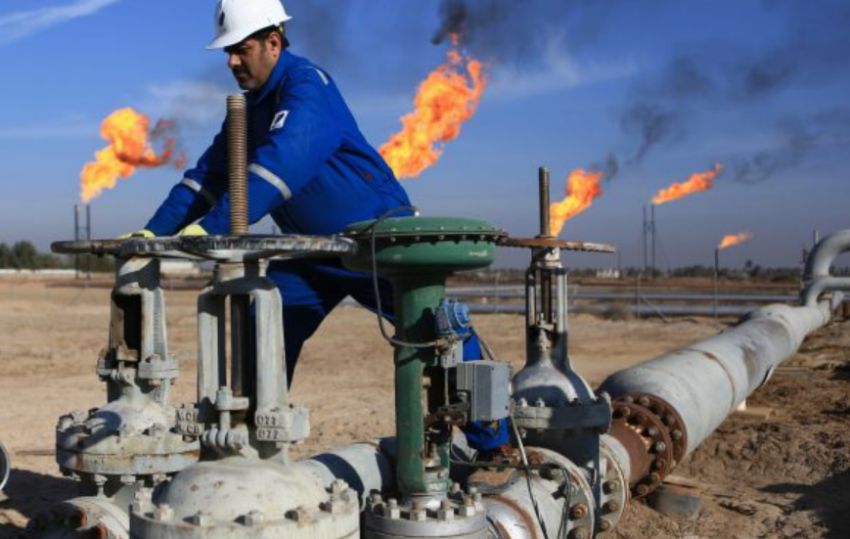
Alongside their efforts to stop Iraqi funds from flowing to Iran, Trump officials are also seeking to finalize a long-delayed reopening of a key Iraqi oil export outlet. Additional Iraqi oil exports would help mitigate the effect on the global oil market from reduced sales of Iranian oil. Exports of about 300,000 barrels per day of oil from the Kurdish-controlled north were halted in early 2023 over a dispute between Baghdad and the autonomous Kurdistan Regional Government (KRG) over the Kurds’ right to export oil independently of Iraqi national oil institutions. Negotiations between Baghdad and Erbil to restart the exportation have repeatedly stalled over the past two years. However, pressure on Baghdad from the Trump administration––reportedly including the threat of sanctions––paved the way for finalizing an agreement. Iraq’s Oil Ministry announced Tuesday all procedures had been completed and the flow of exports through the pipeline would restart this week. Still, if Trump accomplishes his goal to reduce Iranian oil exports from their current level of about 1.5 million barrels per day (almost all of which is to China) to “nearly zero,” the northern Iraqi oil exports will not compensate for a loss of supply of that magnitude to the global oil market.
Trump officials have not stopped at pressuring Baghdad to sever its economic links to Iran. They have also warned Iraq’s government it faces economic consequences if it is unwilling or unable to bring Iran-aligned Iraqi militia groups firmly under central government authority––or disarm them outright. Iraqi officials have told journalists they are aware of growing calls in Washington for financial and economic sanctions to pressure Baghdad to dismantle militias with strong links to Iran’s Islamic Revolutionary Guard Corps – Qods Force (IRGC-QF). One report in regional media quoted an Iraqi foreign ministry official as saying senior Trump officials had proposed to their Iraqi counterparts a plan to «disengage Iraq from Iran.”
The Iraqi official added that in early February, Washington sent direct messages to the Iraqi government about the necessity of dismantling and disarming Iran-aligned armed factions, especially the seven believed to be involved in attacks against Israel and U.S. military sites since the October 7, 2023, Hamas attack on Israel. U.S. officials reportedly identified the seven groups of particular concern as those operating under the umbrella name “Islamic Resistance in Iraq:” Kata’ib Hezbollah (KH), Asa’ib Ahl al-Haq (AAH), Harakat Hezbollah al-Nujaba, Harakat Ansar Allah al-Awfiya, Kata’ib Sayyid al-Shuhada, Kata’ib al-Imam Ali, and Liwa al-Tafuf. Of those, KH and AAH are already designated by the U.S. as Foreign Terrorist Organizations (FTOs), imposing strict sanctions on any foreign company conducting business transactions with the named groups.
Iraqi officials report their Trump counterparts are, in the short term, focused on ensuring Iran-aligned Iraqi factions cannot obtain additional supplies of Iran-supplied armed drones and medium-range missiles. Some of the Iran-backed groups have used these weapons against Israeli targets and U.S. military bases in Iraq and Syria. Yet, Iraqi sources complain that Trump officials also want to expand the restriction on supplies of those weapons to all Iraqi armed factions––even those cooperating with the national command structure and not with the IRGC-QF. On the other hand, Trump officials have centered their warnings on economic penalties, refraining, at least for now, from threatening direct U.S. military action against any of the Iraqi groups. The Iraqi factions have generally stood down from attacking U.S. forces in Iraq or Israel since the January 2025 Israel-Hamas ceasefire accord, but might resume their assaults if the Gaza accord were to break down.