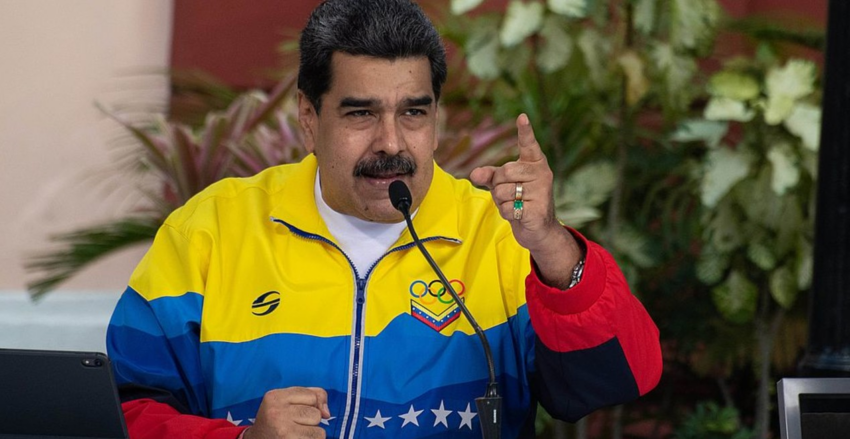
On January 10, Venezuelan President Nicolás Maduro was sworn in for his third, six-year term in office, despite immense controversy over the results of the election in July 2024 against opposition candidate Edmundo González Urrutia.
Publicado en The Soufan Center, el 22 de enero de 2025
- The July 2024 election results, which placed Maduro at 51.95 percent, were widely disputed, with the Carter Center and other observers condemning the process as flawed and undemocratic.
- Post-election protests demanding transparency were met with deadly force, as government militias killed at least 22 protesters and detained over 2,400 individuals across the country.
- Maduro’s regime has withstood international sanctions aimed at addressing Venezuela’s democratic erosion by strengthening its relationships with Russia and China, securing vital economic support, and consolidating the regime through strategic alliances.
On January 10, Venezuelan President Nicolás Maduro was sworn in for his third, six-year term in office, despite immense controversy over the results of the election in July 2024 against opposition candidate Edmundo González Urrutia. Venezuela’s National Electoral Council (CNE) announced on July 29 that Maduro had received 51.95 percent of the votes and González 43.18 percent. The Carter Center, a U.S.-based think tank deployed a technical election observation mission to Venezuela to observe the election at the invitation of the CNE. Based off its observations, the Carter Center rejected the results of the election stating the following: “The Carter Center cannot verify or corroborate the results of the election declared by the National Electoral Council (CNE), and the electoral authority’s failure to announce disaggregated results by polling station constitutes a serious breach of electoral principles.”
Following the announcement of the election results, protesters in Venezuela and around the world demanded that electoral authorities publish the tallies of the election to expose Maduro of committing election fraud. These protests were met with a high level of violence, with “at least 22 protesters … killed, mostly by pro-government militias, and over 2,400 people arrested during anti-government demonstrations since the election results were announced,” according to Armed Conflict Location & Event Data (ACLED).
González, along with Maria Corina Machado, an opposition leader who was banned from running against Maduro, both went into hiding after the election results were announced. González then fled to Spain and Machado was forcibly detained, then released, upon emerging from hiding to attend an anti-Maduro protest one day before Maduro’s inauguration. Her detention sparked international condemnation, with the U.K., U.S., Canada and the European Union (EU) announcing sanctions against the regime following her arrest. González has since used his exile as an opportunity to meet with various leaders in Latin America and the United States, many of whom have identified González as the rightful winner of the election. Most recently, González attended U.S. President Donald Trump’s inauguration on Monday as a guest of Florida Senator Rick Scott.
Since Maduro took office in 2013, over 15,000 political arrests have been documented according to Venezuelan human rights group Foro Penal. The regime has systematically dismantled democratic institutions, with Human Rights Watch reporting that Venezuelan security forces have killed nearly 18,000 people in instances of alleged “resistance to authority” since 2016. In addition to targeting political opposition, the government has leveraged a strategy of stifling dissent through violent repression, including the use of pro-government militias and vigilantes, arbitrary detention, and torture of activists, journalists, and opposition leaders. Notably, opposition leader Leopoldo López was under house arrest for years, while Maria Corina Machado and other prominent critics have faced either detainment or forced exile.
As a result of this democratic backsliding under the Maduro administration since 2015, Venezuela has faced widespread sanctions from the Western world, including against individuals, government entities and access to financial markets. The Washington Office on Latin America (WOLA) reports that U.S. sanctions have caused the Venezuelan state to lose between $17 billion and $33 billion in revenue, leading to a protracted and devastating financial crisis which saw inflation reach 344,509.5 percent its peak in 2019. For example, a liter of milk could cost a Venezuelan a third of their monthly wage.
Maduro has adeptly leveraged the country’s economic crisis, exacerbated by international sectoral sanctions, projecting himself as the defender of Venezuelan sovereignty against “imperialistic” U.S.-led intervention, adopting the mantle of previous Venezuelan strongmen like Hugo Chavez. While long-term sanctions were partially lifted following the 2023 Barbados Agreement, designed to facilitate electoral reforms ahead of the 2024 presidential elections, these measures have now been reinstated following the widely disputed elections and violent repression of dissent in the months that followed. The “Maximum Pressure” campaign, initially imposed by President Trump during his first term, sought to oust Maduro by targeting key sectors like oil and finance, but instead, it has deepened Venezuela’s humanitarian crisis, triggered a mass exodus of its citizens, and inadvertently strengthened Maduro’s grip on power.
The sanctions, which targeted key sectors such as oil and finance, have driven Venezuela to form strategic partnerships with states that are prepared to circumvent international restrictions. For example, in 2018 Russia and Venezuela signed a $5 billion deal to consolidate military cooperation, and Russian oil giant Rosneft also gained a large stake in Venezuela’s oil industry – following a U.S. ban on Venezuelan oil imports. Similarly, it is estimated that China has financed over $60 billion worth of projects in the Latin American country and has consistently recognized the legitimacy of the Maduro regime, assisting Maduro to gain a seat on the UN Human Rights Council and ultimately acting as a bulwark to diplomatic pressures. This support has provided a lifeline to the regime and increased its dependence on countries with strategic interests in the region. Moreover, these strategic alliances have allowed Maduro to portray Venezuela as part of a broader geopolitical resistance to so-called U.S. hegemony.
Trump’s second term is likely to see a combination of continued sanctions yet pragmatic engagement with Maduro. With Trump’s recent statement that he “will stop buying oil from Venezuela” suggests the preservation of aggressive sanctions, a full oil embargo is unlikely given Venezuela’s position as the third largest oil exporter to the U.S. Moreover, reinstating assertive measures could further isolate Venezuela from the West and consolidate its relationship with strategic allies, such as China. On the issue of migration, Trump may seek to enhance relations with Maduro to curb Venezuelan migration – over 7.7 million Venezuelans have fled since 2012 due to the regime – and may offer relief from sanctions in exchange for increased deportation flights.